Islamic Marriage Dress Guide: Modest & Elegant Wedding Attire
Allah says in the Quran: “And of His signs is that He created for you from yourselves mates that you may find tranquility in them; and He placed between you affection and mercy.” (Surah Ar-Rum 30:21). This sacred bond begins with the Nikkah ceremony, making the choice of an Islamic marriage dress a deeply spiritual and personal decision.
The Spiritual and Psychological Importance of Attire in a Muslim Wedding
Choosing your wedding attire is more than just a fashion statement; it carries immense psychological and cultural weight. For a Muslim bride or groom, the ideal wedding outfit beautifully balances individual personal expression with religious values. From a psychological standpoint, what you wear on your wedding day significantly influences your confidence, comfort, and emotional well-being during one of the most monumental milestones of your life. It is not merely about looking beautiful for a few hours, but about feeling aligned with your core beliefs and identity as you step into a lifelong commitment. Across different global traditions, cultural expectations can sometimes add pressure to outdo others, yet Islam gently reminds us to prioritize grace and intentionality.
In 2026, modern Muslim couples are increasingly opting for ensembles that respect regional customs while strictly adhering to Islamic guidelines of modesty (Haya). For instance, brides frequently look for silhouettes that offer full coverage without sacrificing intricate artistry, while grooms seek sophisticated, respectful attire that complements their partner. Navigating these choices can feel overwhelming, but finding a supportive space to plan your future makes all the difference. When you find a compatible partner who shares your vision of a modest life, planning these details becomes a beautiful, shared journey. Platforms like Errange Marriage help you connect with family-oriented Muslims who value these same principles, ensuring your journey toward a blessed union begins on the right foundation.
As the Prophet Muhammad (peace be upon him) beautifully stated: “Modesty brings nothing but good.” (Sahih al-Bukhari). This timeless wisdom serves as the ultimate guiding principle when selecting your wedding day attire.
Understanding Modesty Requirements for Brides and Grooms
When planning your bridal look, keeping specific design principles in mind ensures your dress remains beautifully modest yet breathtakingly elegant:
-
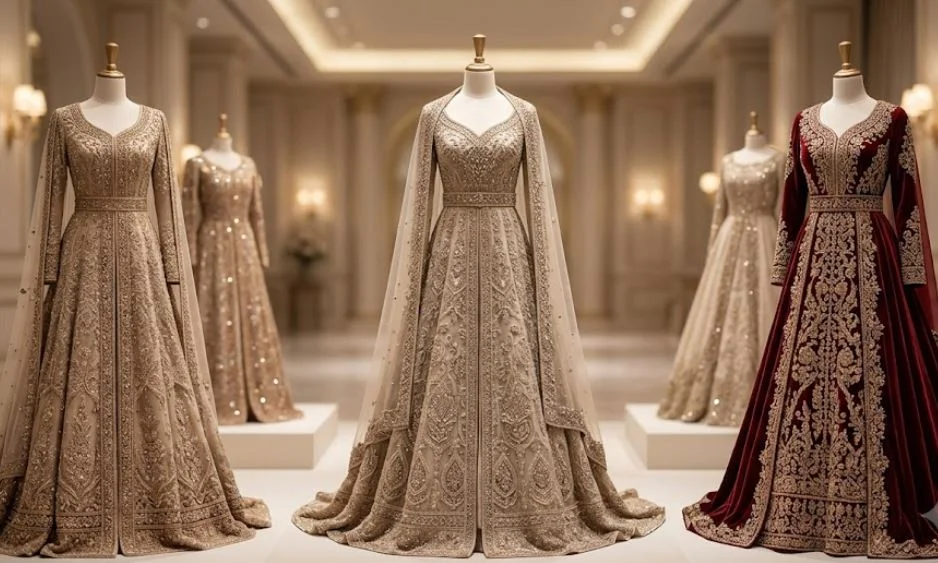
Fabric Transparency: Choose high-quality, opaque materials. If you love delicate fabrics like tulle, chiffon, or lace, ensure they are layered with a solid, non-transparent lining underneath.
-
Silhouette and Fit: Opt for silhouettes that flow elegantly without being overly form-fitting. A-line gowns, ball gowns, and traditional layered dresses are fantastic choices because they provide comfort and fluid movement.
-
Necklines and Sleeves: High necklines and full-length sleeves are standard features that look incredibly regal and sophisticated.
-
Head Coverings: The Hijab or bridal veil can be seamlessly integrated into your look. Many modern designers specialize in embellishing headscarves with matching embroidery, pearls, or delicate beadwork to harmonize perfectly with the bridal gown.
For grooms, the principles of Haya translate into dignified, respectful, and well-tailored choices:
-
Proper Coverage: The attire must comfortably cover the groom’s awrah (the minimum area to be covered according to Islamic law).
-
Avoiding Excess: Outfits should look celebratory without being excessively boastful or overly extravagant.
-
Fabric Choices: In accordance with Islamic traditions, grooms avoid pure silk clothing and gold embellishments, opting instead for high-quality wool, cotton, linen, or sophisticated synthetic blends.
Global Inspirations for Traditional and Contemporary Bridal Attire
Muslim communities span every corner of the globe, resulting in a rich tapestry of wedding fashion that varies by region.
The Grace of Arab and Middle Eastern Bridal Gowns
In the Middle East, brides frequently favor classic white or ivory gowns featuring high collars, long sleeves, and sweeping trains. These dresses often combine structured satin with intricate lace overlays. They are typically paired with an embellished hijab or a long, floor-length veil that adds a dramatic, royal aesthetic to the Nikkah ceremony.
Vibrant Colors of South Asian Outfits
For Pakistani, Indian, and Bangladeshi weddings, brides lean toward vibrant hues like crimson, maroon, emerald, and pastel gold. Traditional ensembles like the Lehenga, Gharara, or Anarkali suit feature heavy hand-embroidery called Zardozi. These multi-piece outfits inherently offer exceptional coverage while remaining rich in cultural heritage.
Subtle Sophistication in Southeast Asia
In countries like Malaysia and Indonesia, the traditional Baju Kurung or Kebaya is highly favored. Modern interpretations of these styles feature sleek, elongated silhouettes made from luxurious fabrics like batik or brocade, beautifully paired with a neatly styled hijab.
Muslim brides across different
continents
embrace a breathtaking spectrum of colors. These choices are deeply rooted in regional history, geography, and cultural symbolism.1. Asia (The Kaleidoscope of Tradition)
Asia holds some of the most vibrant and historically diverse color traditions for Muslim brides:
-
South Asia (Pakistan, India, Bangladesh): Deep Crimson and Ruby Red are the undisputed traditional rulers, symbolizing prosperity, joy, and fertility. However, modern trends have seen a massive rise in Pastel Golds, Dust Pinks, and uniquely for 2026, Sage Green has shifted from pre-wedding events straight into the primary Nikkah ceremony.
-
Southeast Asia (Malaysia, Indonesia): Brides frequently favor Pastel Shades, Ivory, and Mint Greens for their traditional Baju Kurung or Kebaya, reflecting a preference for serene, soft, and nature-inspired elegance.
-
East & Central Asia (e.g., Afghanistan, Uzbekistan): Vibrant Green (highly revered as the color of Islam and new beginnings) is highly prominent, often paired with heavy gold embroidery.
2. Africa (Bold Heritage and Ornate Textures)
African Muslim bridal wear is famous for its rich textures and symbolic color palettes:
-
North Africa (Morocco, Algeria, Tunisia): In the Maghreb, brides change outfits multiple times, moving through a rainbow of colors. However, Emerald Green, Royal Blue, and Deep Burgundy heavily dominate the traditional silk and velvet Takchitas or Kaftans, heavily adorned with gold thread.
-
West & East Africa (Nigeria, Somalia, Kenya): Brides celebrating with traditional Aso Oke or a Somali Dirac often choose striking, celebratory metallic tones like Bright Gold, Vibrant Orange, Magenta, and Purple, showcasing absolute joy and community celebration.
3. Europe (Contemporary White and Subtle Royalty)
-
Western & Eastern Europe (including the Balkans): In countries like Bosnia and Albania, or among European Muslim diaspora communities, the Classic White, Cream, or Pearl Ivory gown is the standard choice. European Muslim brides seamlessly blend Western bridal aesthetics with Islamic guidelines by styling high-necked, long-sleeved lace gowns paired with a matching white hijab or silk veil.
4. North & South America (The Modern Fusion)
-
The Americas (USA, Canada, Brazil): Because the Americas are home to a rich melting pot of Muslim backgrounds, bridal colors are incredibly diverse. However, the prevailing trend is Modern Fusion. Brides frequently opt for Pure White, Champagne, or Blush Pink silhouettes (like a white Lehenga or a white Abaya-style gown) to bridge Western aesthetics with their Islamic identity.
5. Oceania (Diverse Diaspora Styles)
-
Australia & New Zealand: Similar to North America, there is no single native color. The bridal palette depends entirely on the bride’s ancestral roots (e.g., Lebanese-Australian brides leaning toward elegant White/Silver gowns, and Fijian-Indian or Pakistani-Australian brides choosing Rich Reds and Maroon).
-
Conclusion
Choosing an Islamic marriage dress is a beautiful celebration of faith, culture, and individual identity. By focusing on modesty, selecting comfortable fabrics, and honoring your personal heritage, you can step into your Nikkah ceremony feeling confident and serene. Remember that the external beauty of your wedding day is simply a joyful reflection of the spiritual journey you are embarking upon.
If you are still searching for that special person to share this beautiful journey with, take a structured step forward. Explore the affordable Pricing Packages on Errange Marriage, read inspiring Success Stories from couples who met safely, or reach out directly via their Contact Page to learn more about how they support your search for a meaningful, halal union.